
There are approximately 900 species of ticks in the world. In the U.S., the vast majority of Lyme disease cases are transmitted to humans and other animals by two species: the deer tick (Ixodes scapularis) in the Midwest and on the East Coast, and the black-legged tick (Ixodes pacificus) on the Pacific Coast. The highest number of cases occurs in the Northeast due to its climate and mammal populations. Ticks spread Lyme disease through the bacterium Borrelia burgdorferi, which they receive from feeding on infected mammals. This means that while all deer ticks and black-legged ticks can carry Borrelia burgdorferi, not all will transmit the disease.
As an undergraduate student at SUNY College of Environmental Science and Forestry in Syracuse, New York, Crystal Silliman had the opportunity to participate in a research project investigating bacterial co-infections in the deer tick (Ixodes scapularis).
Afterward, she worked as a lab tech at Cornell. She is now a PhD student at UCSB exploring the role of environmental changes in tick populations and how the pathogens they carry may be affected. As a New York native, she was surprised at the lack of public initiatives towards Lyme disease prevention, having grown up with tick checks as part of her daily routine.
In 2025, she embarked on a project to investigate how California’s climate whiplashes, extreme shifts in weather, in recent years have affected tick populations. Did droughts cause a decrease in the tick population? Did the population rebound with the consequent wet years?
To do so, she sought out areas with high concentrations of ticks with varying microclimates and vegetation. She chose Stunt Ranch for its dry climate; Big Creek for its cool coastal climate; Sedgwick for its inland location and intermediate, hot, and dry climate; and Coal Oil Point Reserve (COPR) for its intermediate coastal climate. COPR was particularly unique, as a highly diverse population of tick species resides in the area.

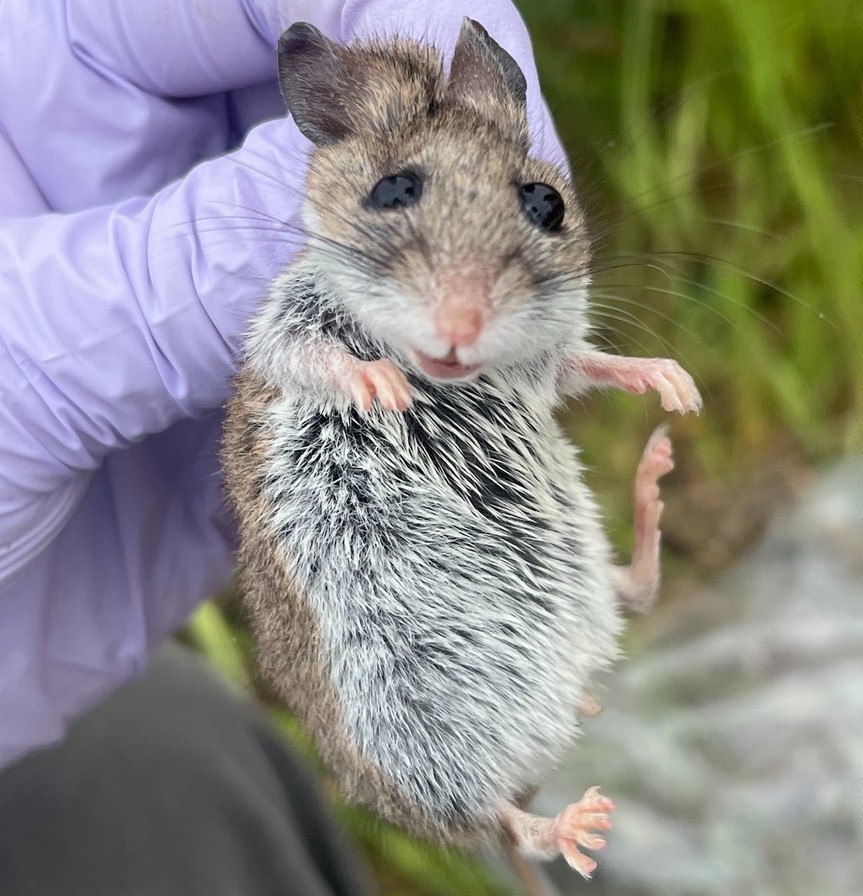
Crystal in the field surveying the mouse population Photos by Crustal Silliman
Climate whiplash and tick populations
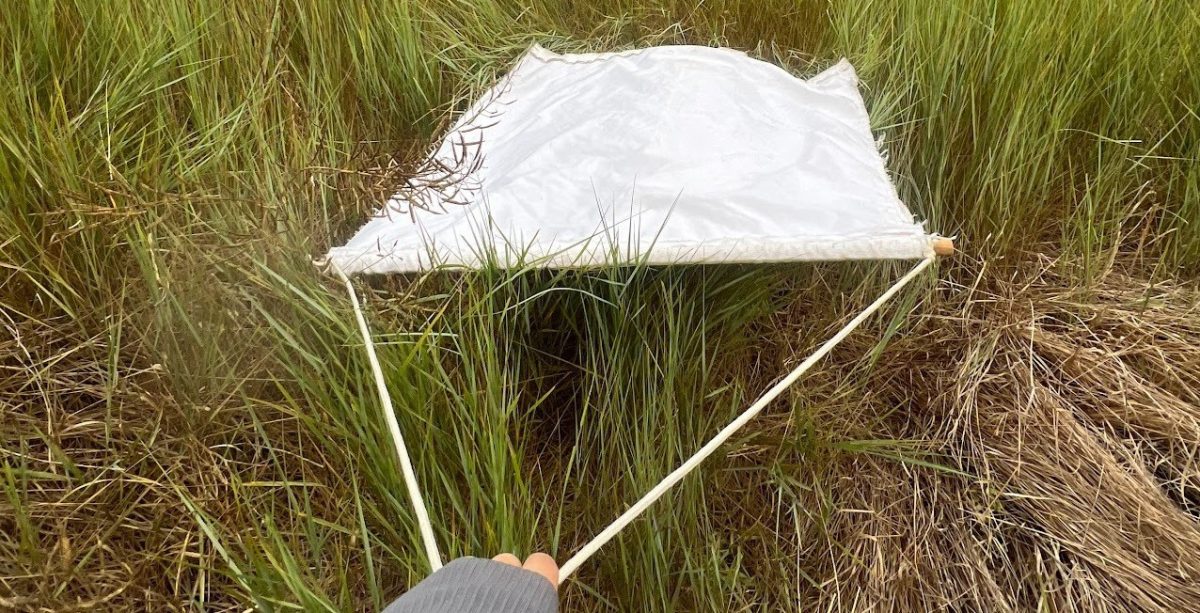
Crystal obtains specimens for her research via tick dragging, a collection method in which ticks attach themselves to a piece of cloth. When she brings them to the lab, she takes a photo of them using a microscope with a camera. She then uses the dichotomous key she compiled over the years to identify the species. Following the identification process, she extracts bacterial DNA and runs a PCR (Polymerase Chain Reaction) test. She then ensures the results are sequenced. Her objective is to detect Borrelia burgdorferi and Borrelia miyamotoi, a positive agent of relapsing fever. To supplement her findings, she also conducts ear biopsies on mammals to determine whether Lyme disease is circulating and how it may consequently spread to humans.
To learn more about Crystal’s research and view her scientific illustrations, you can visit her website.